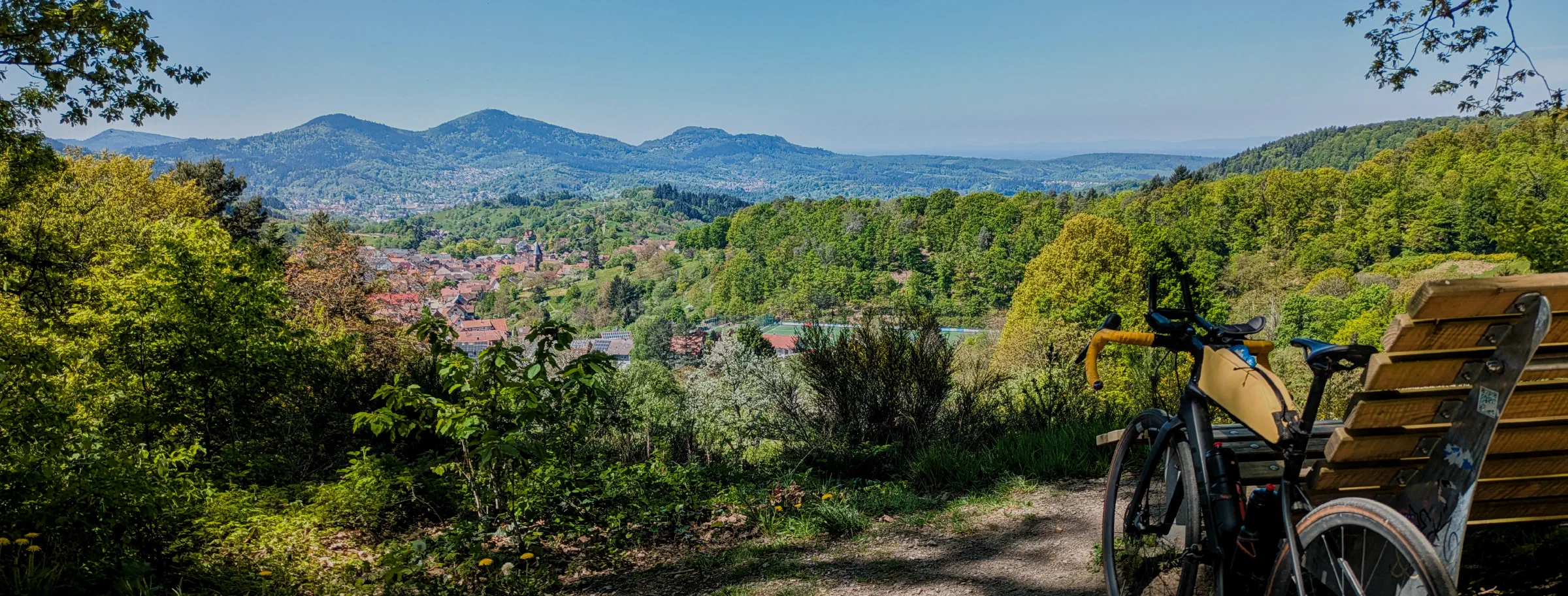
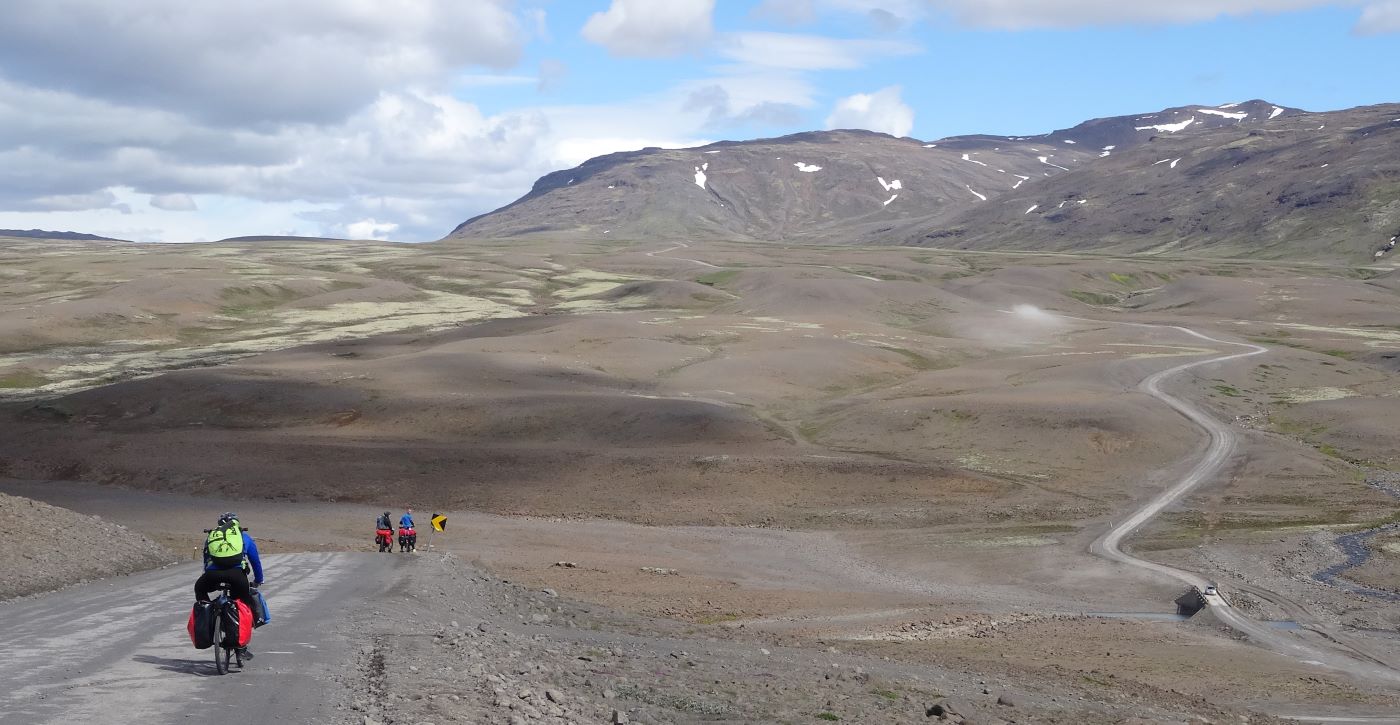
Ten days in Iceland, five bikes, an old hardtail, and way too much luggage. After finishing college, we didn’t want to dive straight back into everyday life—we wanted to get out there one more time: across the highlands, to where the road ends and a trip turns into a little adventure. I’m writing this article in retrospect because I still love thinking back on it today.
In the end, we clocked about 400 kilometers and roughly 3,700 meters of elevation gain. But more important than the numbers are the memories that have stayed with us: headwinds that felt like a wall. Rain that eventually just became part of the day. Hot springs in the middle of a cold, rocky desert. And a flat tire in a place where the nearest bike shop was a long way off.
The Idea: Across the Highlands
The idea came from my buddy Jonas. His uncle had already done a similar tour and was planning another one through the Highlands that summer. After finishing college, it sounded like just the right mix of saying goodbye, freedom, and a touch of grandiosity. We booked flights to Keflavík—bike transport included—and before we knew it, that vague idea had suddenly turned into departure day.
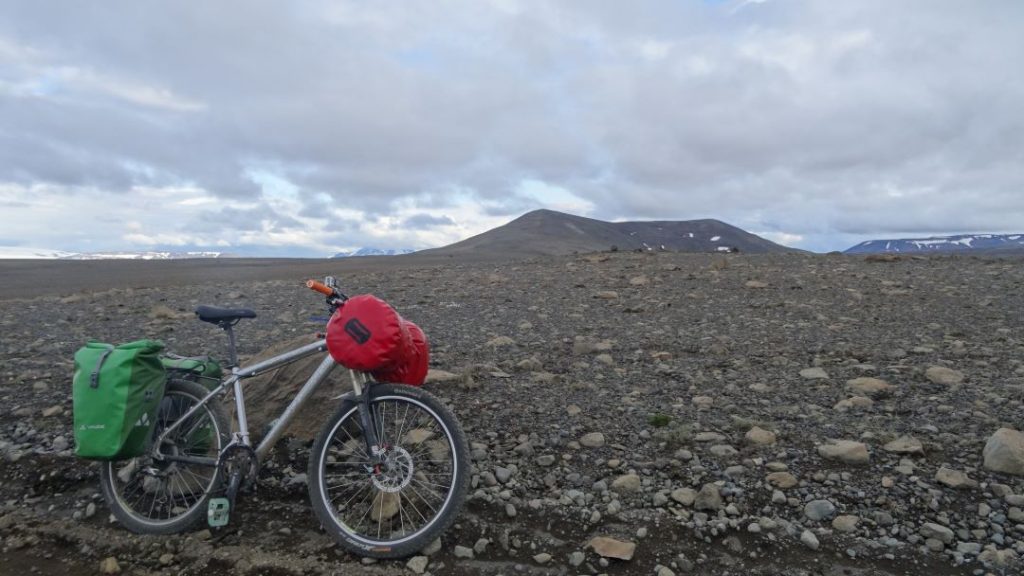
My old hardtail got new tires and a rack. It hadn’t been my favorite bike for trail rides for a long time, but it was just right for Iceland: sturdy, repairable, and not too good to handle gravel, rain, and fords.
Preparation: Weight Becomes a Reality on the Road
For a highlands tour, food has to be planned carefully. There are no supermarkets between the larger towns, so we had to carry enough food for many days. That meant: granola with powdered milk for breakfast, trail mix, pasta with tuna, nuts, and anything else that promised as many calories as possible while weighing as little as possible.
| Meal | Food |
|---|---|
| Breakfast | Cereal, powdered milk, and hot water |
| Main Meals | Trekking meals or pasta with tuna |
| Snacks | Nuts and other non-perishable snacks |
| Water | Refilled daily at campsites or from flowing water sources |
Even so, the food alone for ten days weighed just under eight kilograms—not including water. Together with the tent, sleeping bag, stove, clothing, tools, and spare parts, we were carrying about 30 kilograms of gear per person. At that point, we knew nothing about bikepacking and simply wanted to be prepared for anything.
When it came to tools and spare parts, we deliberately opted for redundancy, without requiring everyone to carry everything:
- Multitool, Leatherman, pump, and tire lever
- Patches, spare inner tube, and spare derailleur hanger
- Spare brake and derailleur cables
- Duct tape, zip ties, and an assortment of small screws
Looking back, that was the right decision. In the highlands, it doesn’t matter whether your gear looks sleek. What matters is whether it gets you going again after a breakdown.
Arrival in Keflavík: First Fix, Then Ride
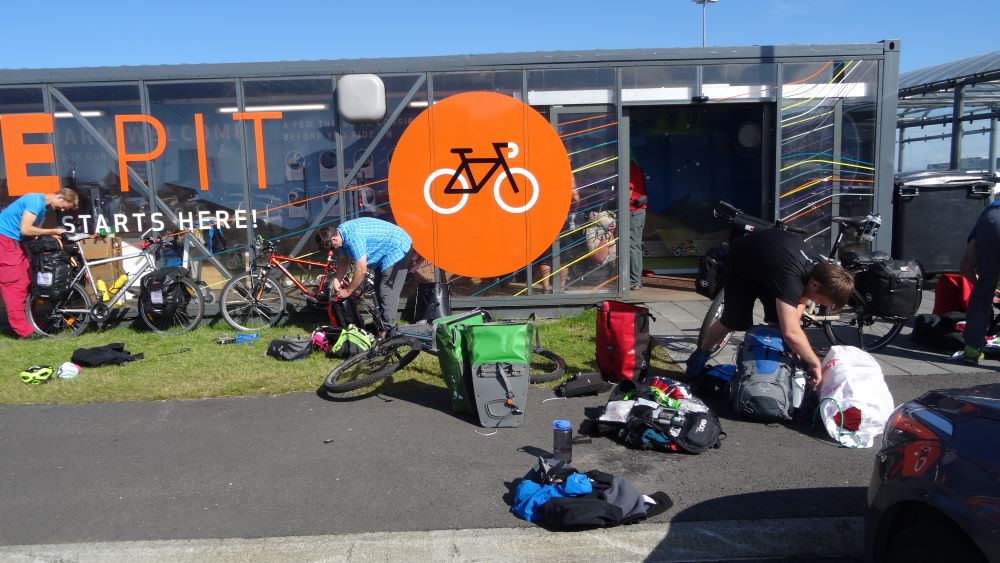
At the end of July, we landed in Keflavík in perfect weather. At the Bike Pit at the airport, we reassembled our bikes, stowed our luggage, and checked one last time to make sure everything was still working. Our bikes had been wrapped in bubble wrap for the flight, which was inexpensive and worked surprisingly well.
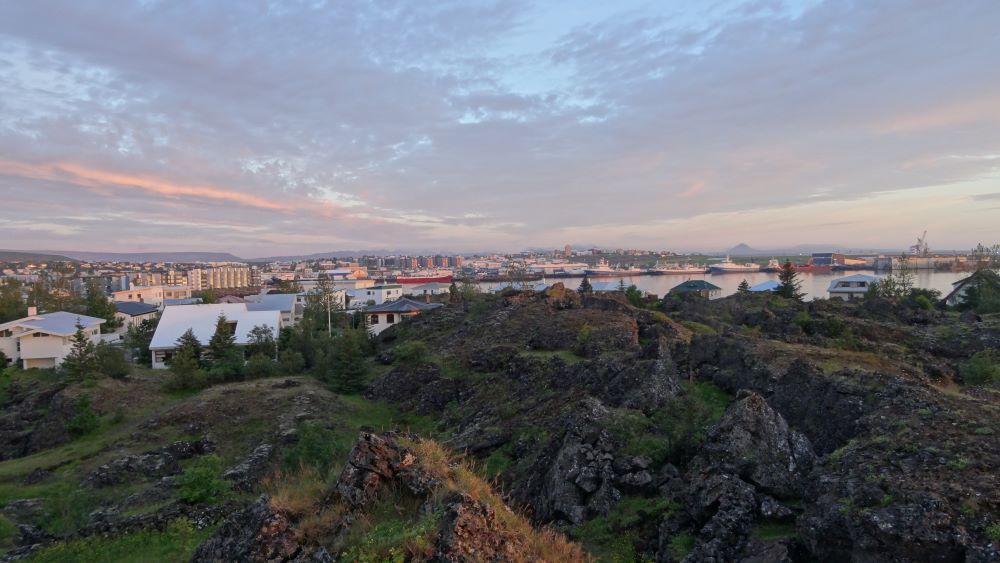
The first leg began late in the evening and took us about 42 kilometers to Hafnarfjörður. We’d bought gas for the stoves along the way—which turned out to be unnecessary. At the campground, we got gas cartridges from fellow cyclists who were on their way back and couldn’t take them on the plane.
The first night was also our first “Iceland moment”: Around 10:30 p.m., we were still sitting outside; it was still light enough, and somehow time began to lose its usual rhythm.
From Rain to Headwinds
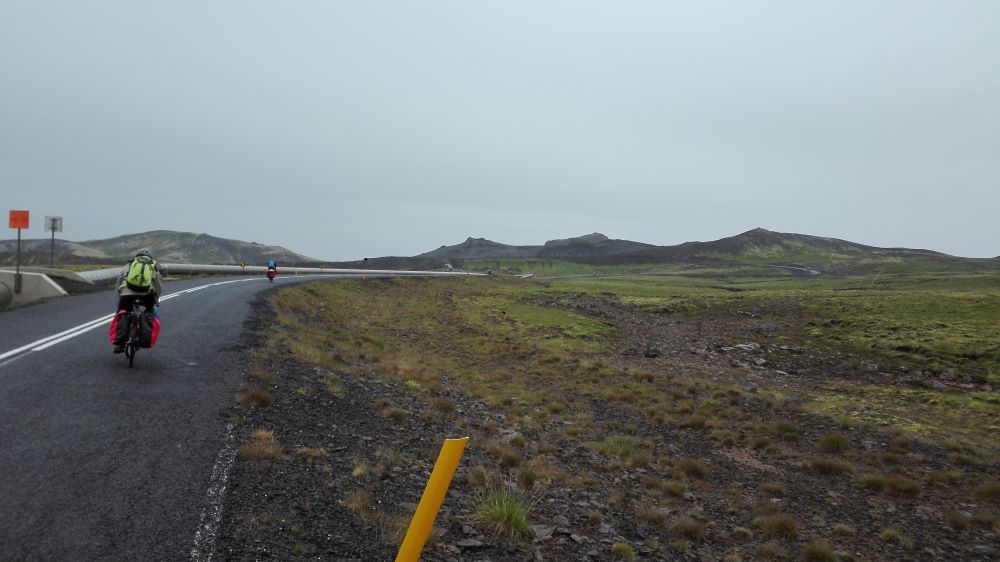
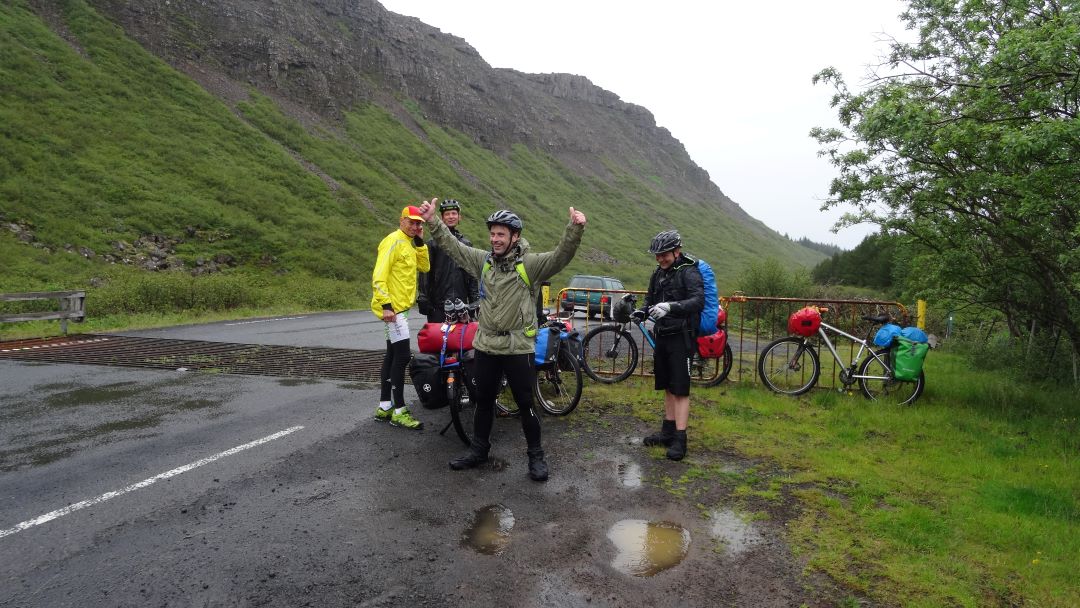
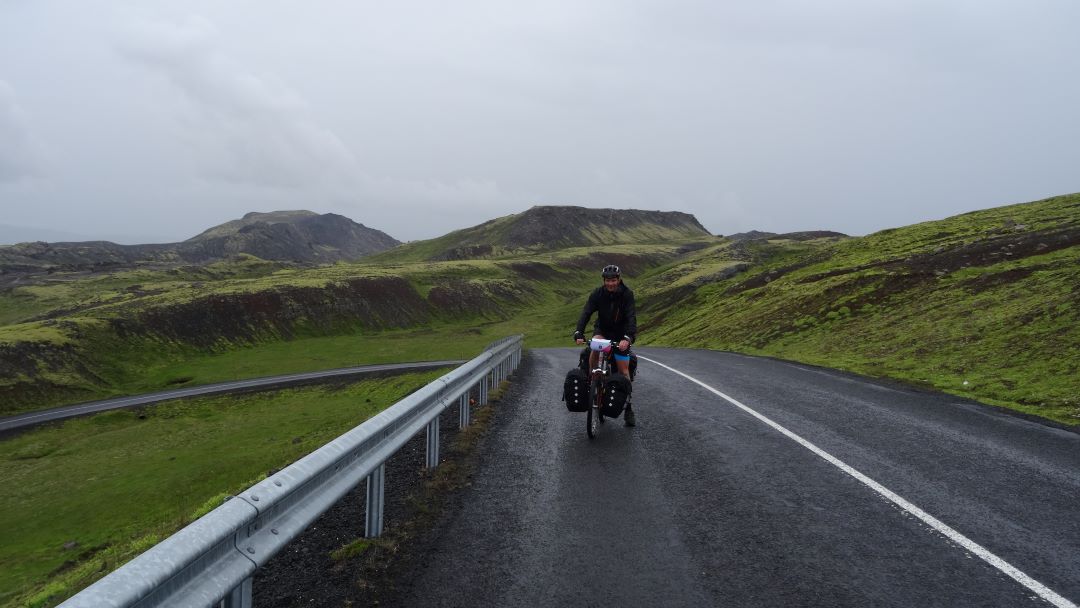
On the second day, we rode via Nesjavellir to Þingvellir. About 75 kilometers and 800 meters of elevation gain, with rain almost the entire way. It was a day that threw Iceland’s harsh weather right in our faces: rain gear on, head down, keep riding.
The next morning, Þingvellir stood in stark contrast to the solitude of the bike ride. The Almannagjá Gorge is impressive, but as part of the Golden Circle, it was understandably crowded. We still took our time exploring the area before continuing on toward Haukadalur and Geysir.
There, instead of rain, we encountered wind. Not just a bit of headwind, but that relentless Icelandic gust that makes even the lowest gears feel too high. Over about 65 kilometers and 400 meters of elevation gain, it felt like we’d ridden much farther than the odometer showed. If I’d had a choice, I would have switched right back to the steady rain from the day before.
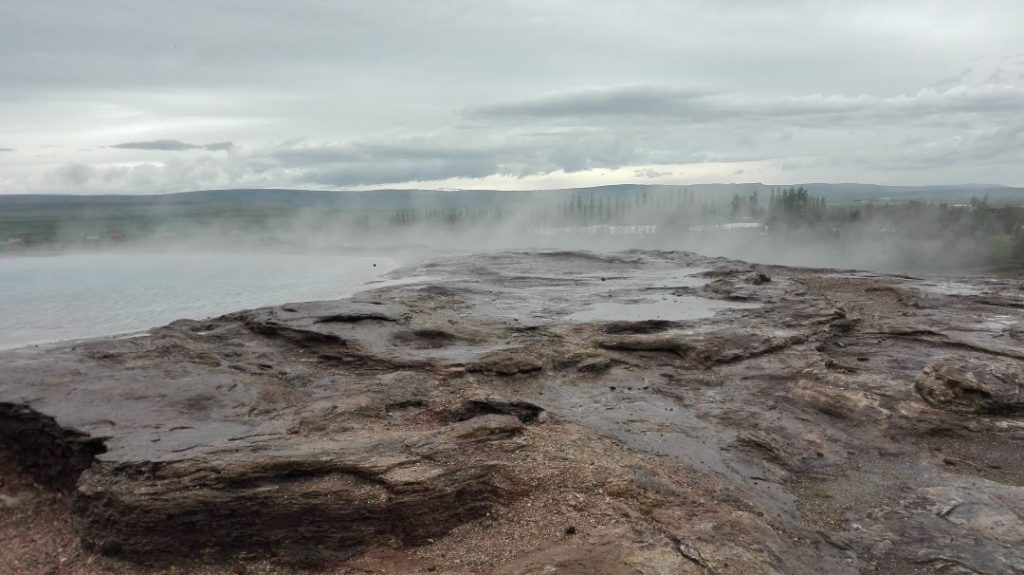
Next to the famous—and now mostly dormant—Geysir, Strokkur spouts water reliably into the sky. We watched this impressive natural spectacle and continued on toward the highlands.
The Highlands Begin at Gullfoss
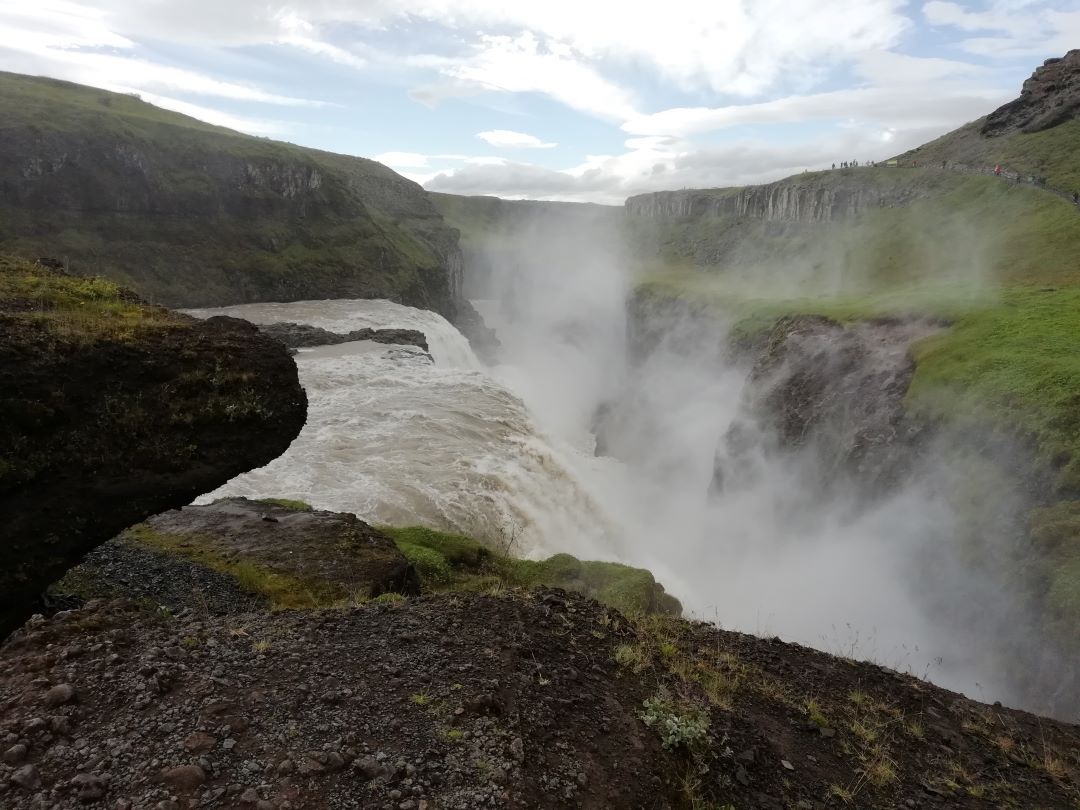
Gullfoss was the last major stop on the Golden Circle. Massive volumes of water, lots of spray, and plenty of tour buses. Beautiful—but for us, it was mainly the point where we were supposed to continue on.
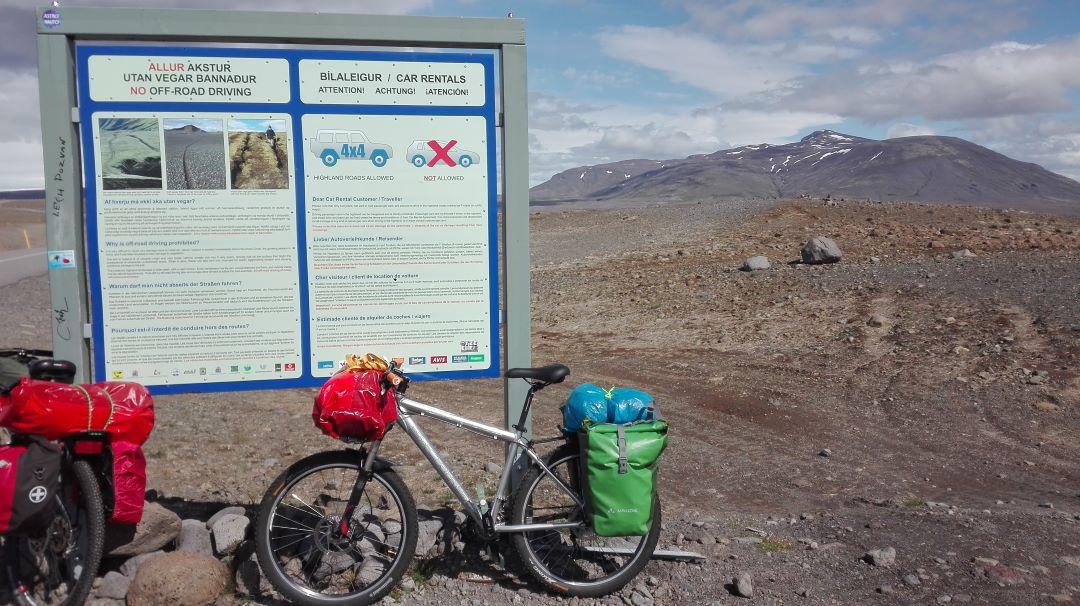
Beyond the waterfall, the area quickly became deserted. A sign made it clear that four-wheel drive was recommended from here on. For us, that meant: less traffic, more gravel, and our first real kilometers through the highlands.
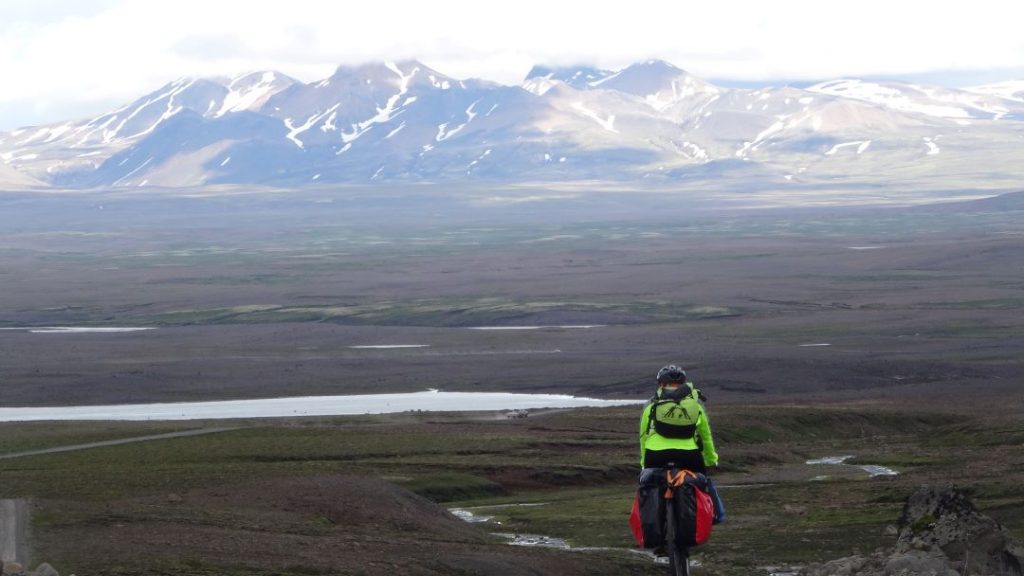
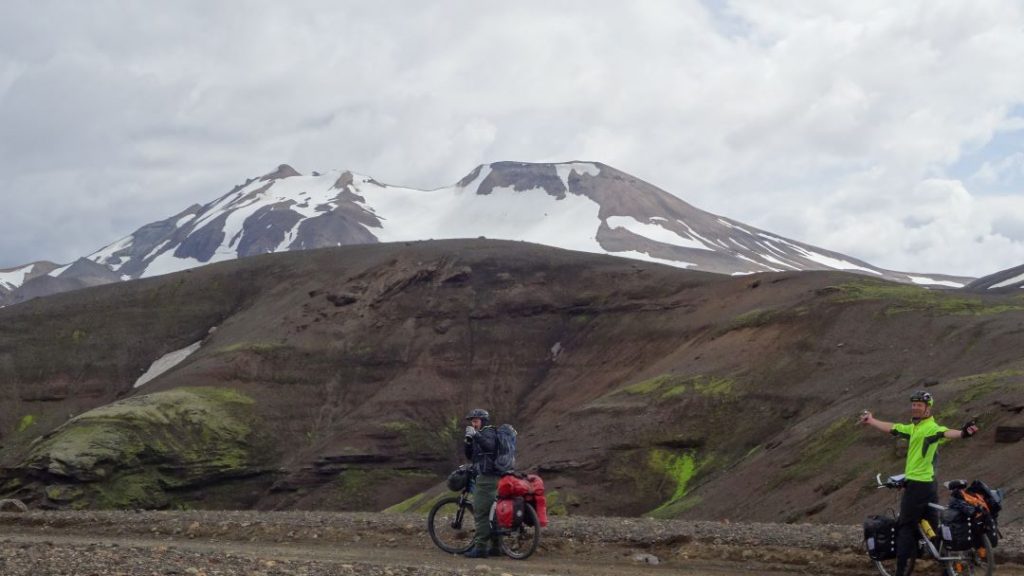
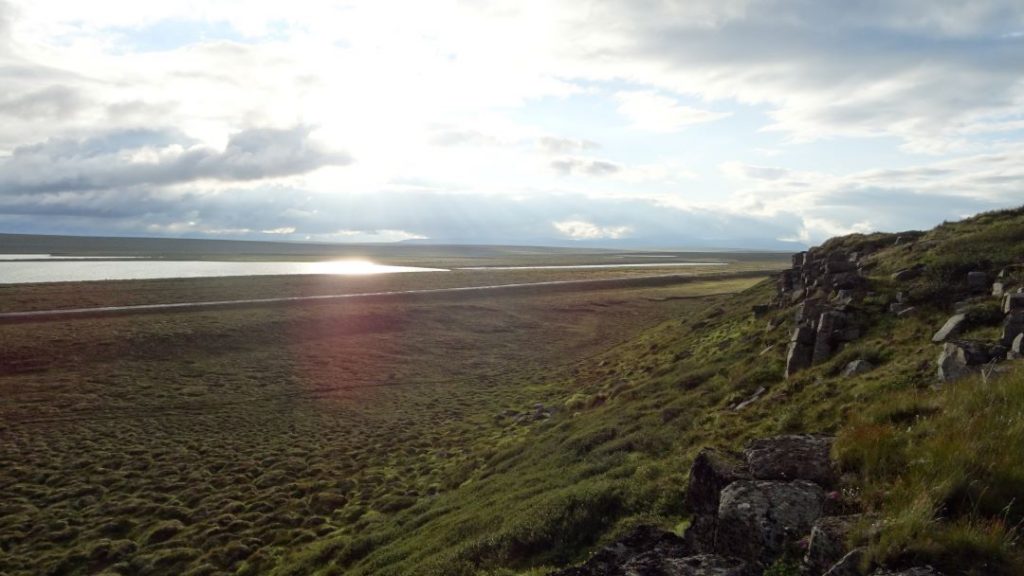
The landscape changed over an astonishingly short distance. First, lakes and green meadows in front of the glaciers; then, a barren stone desert, wide valleys, and a backdrop that looked more like the moon than Europe. The drive to Árbúðir—about 60 kilometers with 650 meters of elevation gain—wasn’t the toughest leg of the journey, but it was one of the most impressive. For dinner, we had spaghetti with tuna—not a culinary revelation, but just right for the moment.
Kerlingarfjöll: The Climb, Disappointment, Hot Water
The next day had two clear goals: the Kerlingarfjöll Mountain Resort and a natural pool in the valley. Plus, a rumor had taken hold that the lodge served french fries. After several days of eating out of bags, that was a surprisingly strong motivator.
The last few kilometers to Kerlingarfjöll were almost entirely uphill. When we arrived, the matter of the fries was quickly settled: Apparently, they’d never been served there. So, back to instant rice.
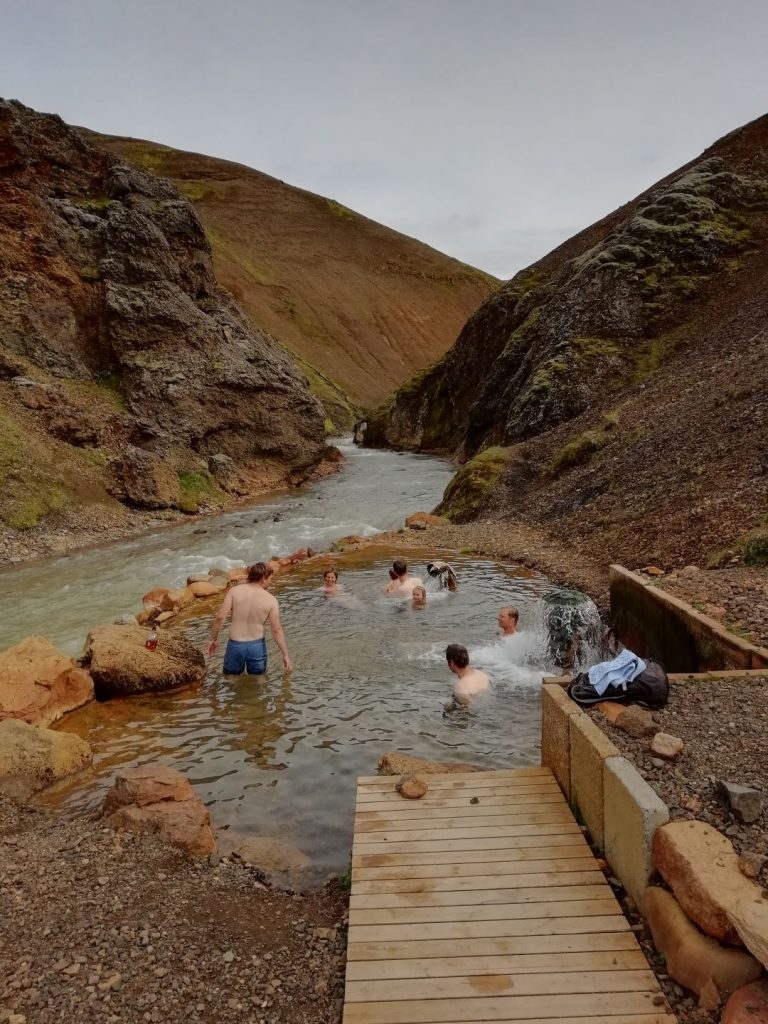
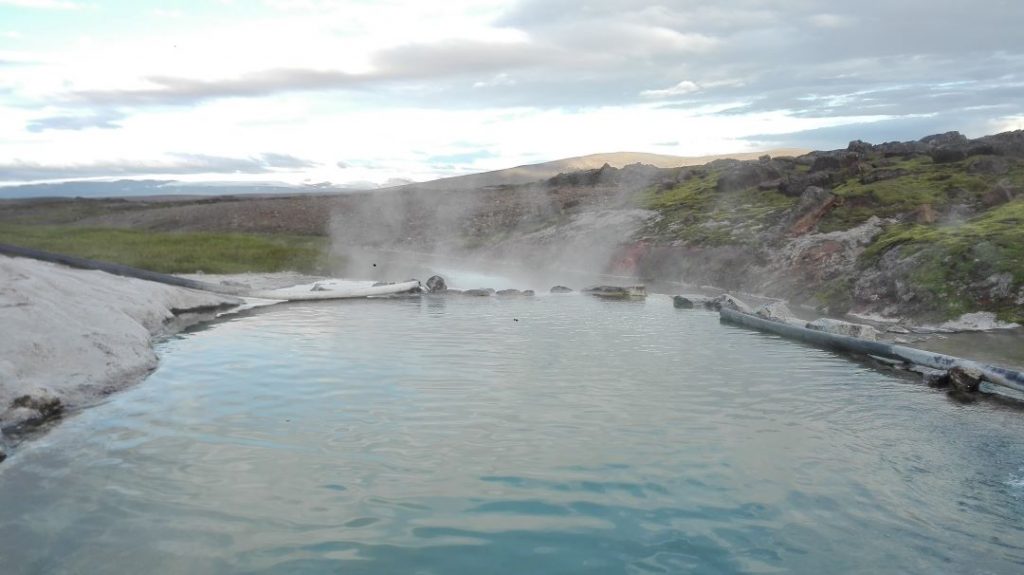
The real reason for staying there lay a short distance outside the camp anyway. Wearing swim trunks and carrying whiskey, we hiked down into the valley to a stone-built pool next to a mountain river. Cold glacial water flowed in from one side, while hot spring water came out of pipes. Looking back, after several cold and long days, that was pretty close to perfection.
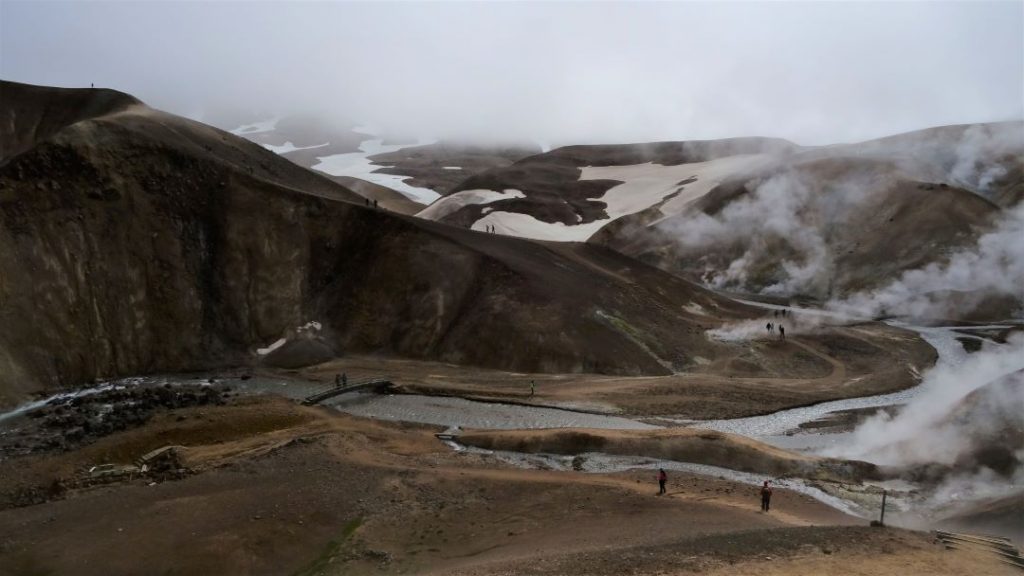
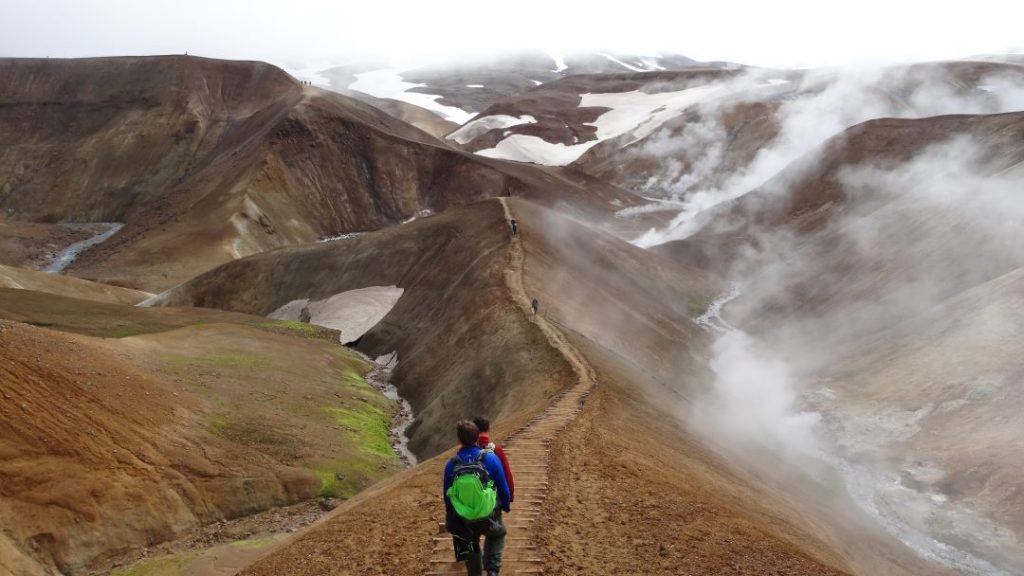
The next morning, we left our bikes behind for a while and hiked through the surrounding area. Snowfields, the smell of sulfur, steaming crevasses, and the glacier: a landscape that feels both surreal and very real at the same time. Afterward, we continued by bike to Hveravellir—just 41 kilometers and about 150 meters of elevation gain, but with the second hot bath of the trip as a reward.
What we learned along the way: Don’t sit too long right next to the hot inlet. Your circulation will eventually make itself known. Very clearly.
Breakdown in the Middle of Nowhere
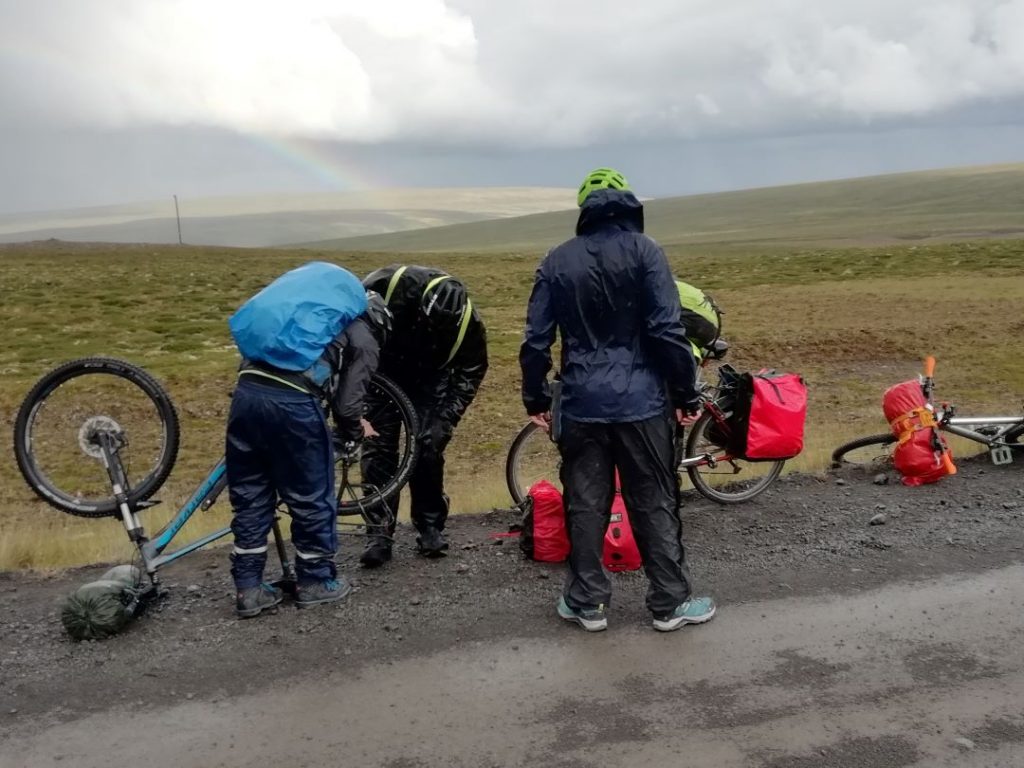
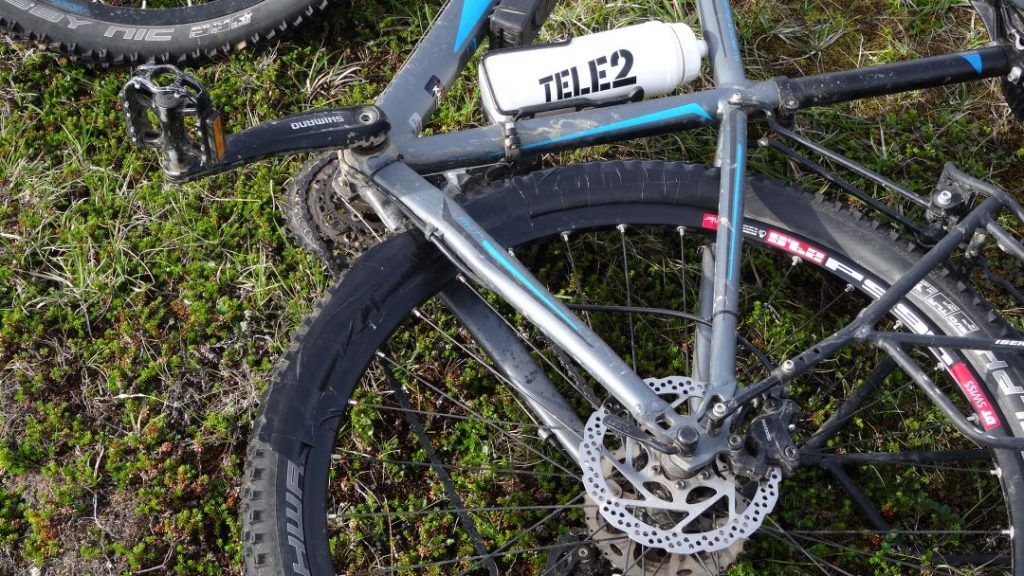
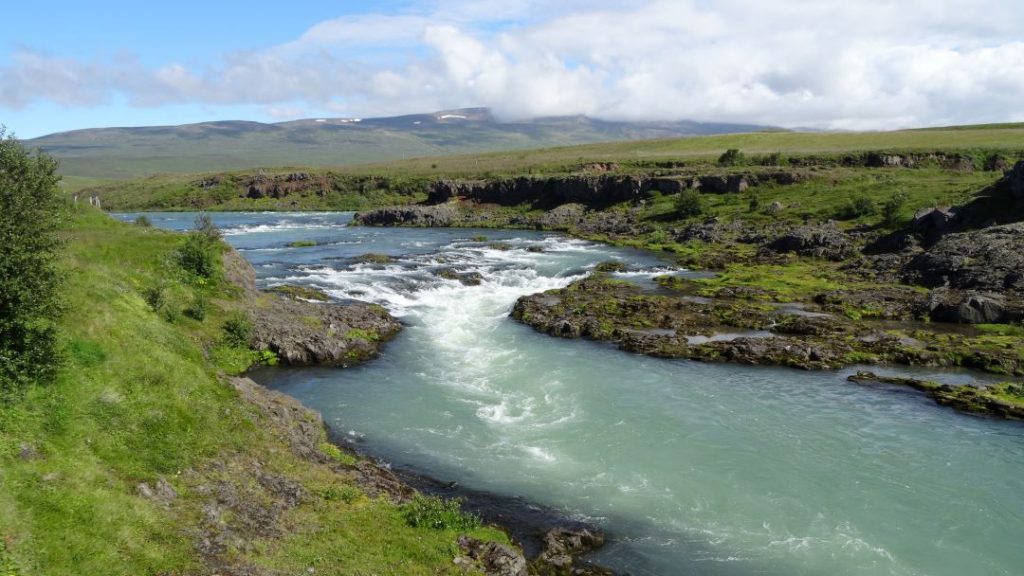
On the way north, the landscape gradually became greener and wetter. Then came a loud bang: Jonas’s rear tire had been torn open on the side; the inner tube had been pushed through the hole and had burst. Not a classic flat tire, but a tire problem in a place with no quick fix.
We set up camp, pooled our tools and supplies, and tried to build a makeshift tire carcass out of scraps of the damaged inner tube, glue, and a lot of duct tape. It wasn’t pretty. But it held.
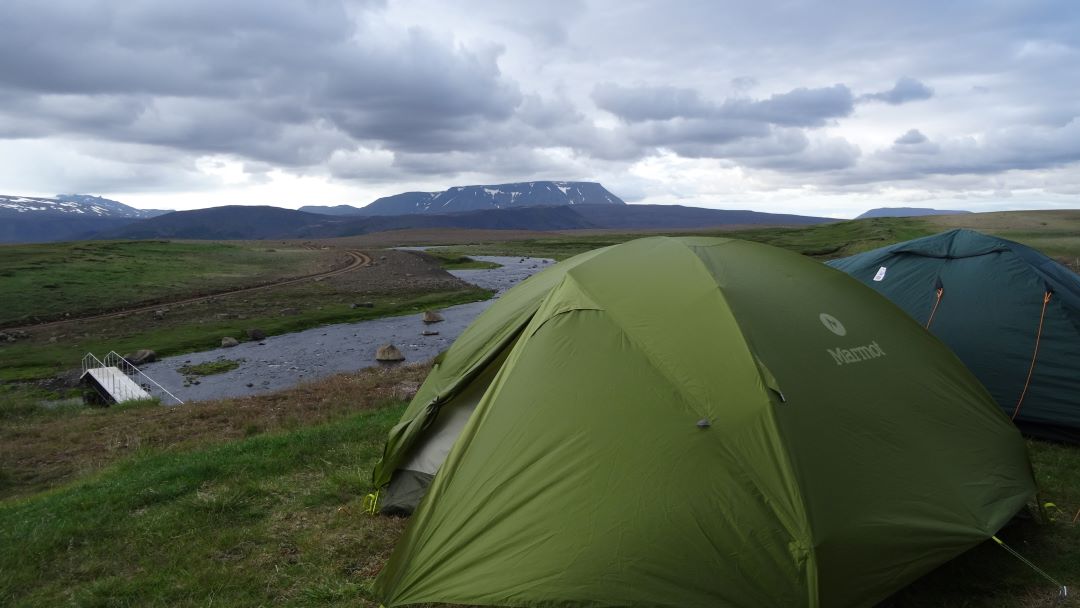
When the rain stopped, the breakdown spot turned into a pretty good campsite in the moss. We had a sunset, whiskey, and the reassuring feeling that the improvised repair might last at least until we reached the coast.
It did. The next day, we distributed Jonas’s luggage among the other bikes and rode the last 50 kilometers to Blönduós, taking as much care as possible not to wear out our gear. After a week in the highlands, the green coastal landscape felt almost like the Allgäu—only with more wind and fewer bakeries.
The Final Kilometers and a Different View of Reykjavík
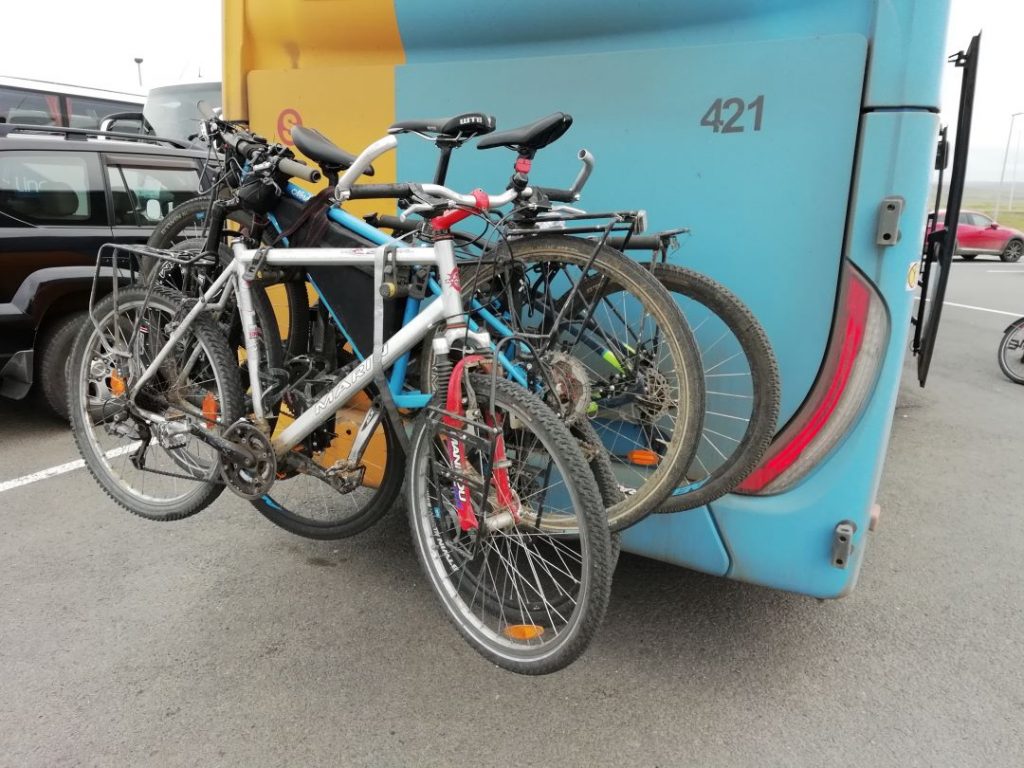
In Blönduós, we decided to take the bus for the remaining 250 kilometers or so to Reykjavík. The Ring Road would have been drivable, but it wasn’t particularly scenic or pleasant. Instead, we had a rest day, visited a swimming pool with hot tubs, and finally got to eat something other than trekking food.
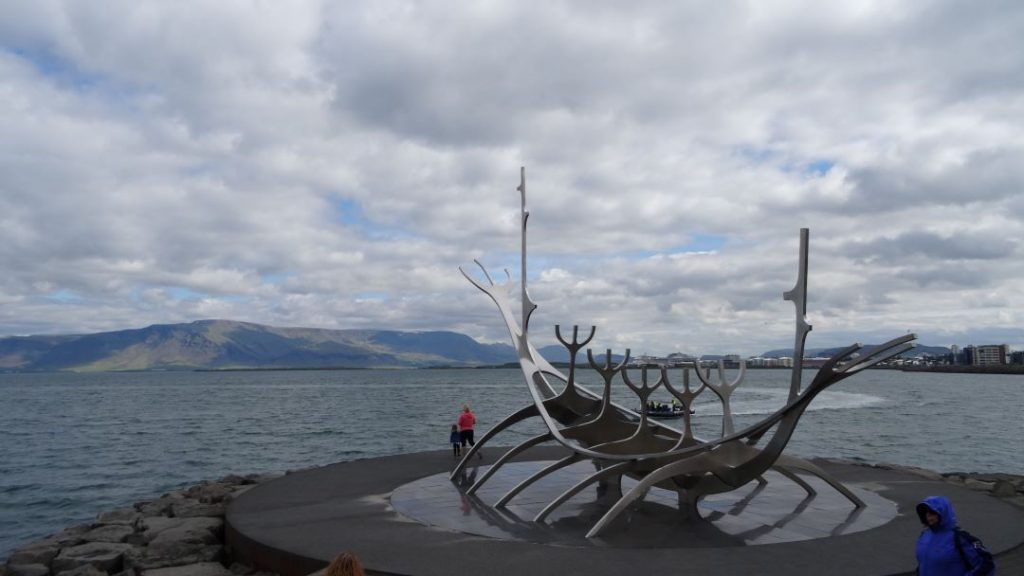
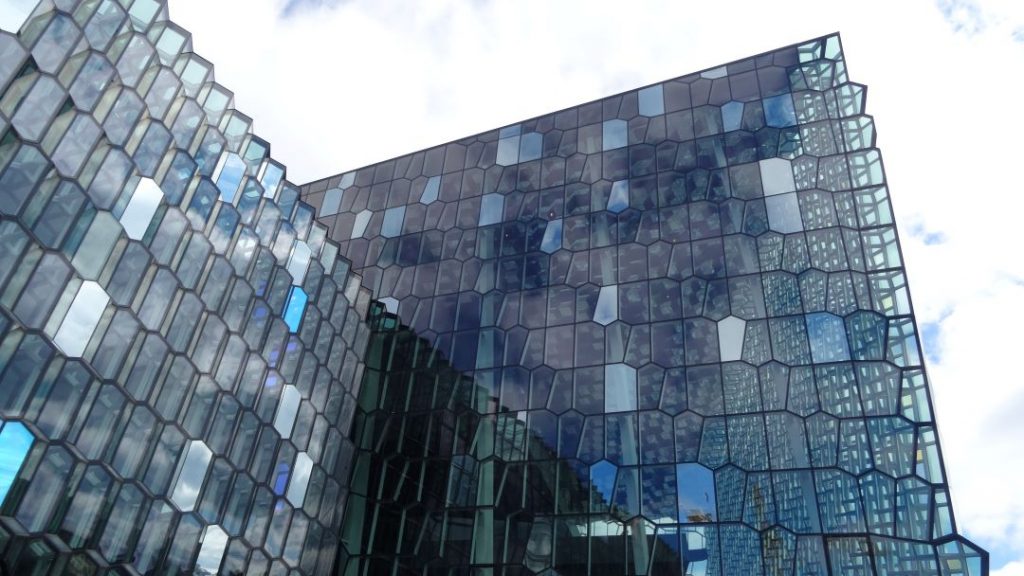
After the past few days, Reykjavík felt strangely urban: modern architecture, souvenir shops, people, traffic. We explored the city, but our minds were still on the gravel roads, the tent, and the hot springs.
For the final leg, we rode about 50 kilometers along the coast back to the airport. Sure enough, the hidden bubble wrap was still waiting for us there. That night, we repacked the bikes for the flight and eventually drifted off to a very brief sleep somewhere between the tent, the boxes, and the departure lounge.
What Remains
The trip wasn’t always easy. Headwinds, constant rain, heavy luggage, and the breakdown regularly reminded us that adventure isn’t just about pretty pictures. That’s exactly why it’s stuck with us so much.
Iceland didn’t give us a perfect bikepacking video. There were wet shoes, improvised repairs, cold mornings, and too many meals from a bag. But there were also empty highland roads, glaciers on the horizon, hot springs after a long day, and the satisfying feeling of having gone very far with very little comfort.
Would I do the tour again? In a heartbeat. Maybe with a little less luggage.
Tour Details
- Distance: approx. 400 km
- Elevation gain: approx. 3,700 hm
- Ride time: eight days on the bike
Route
- Route: Keflavík → Hafnarfjörður → Þingvellir → Geysir → Gullfoss → Kerlingarfjöll → Hveravellir → Blönduós